Table of Contents:
The General Healthcare System (GESY): Structure, Funding, and Universal Coverage
Cyprus completed one of the most significant healthcare transformations in its modern history when the General Healthcare System (GESY) — known in Greek as Γενικό Σύστημα Υγείας — was fully implemented in June 2020. After decades of operating a fragmented, two-tier system that left many residents without adequate coverage, Cyprus finally joined the majority of EU member states in offering universal public healthcare. The system is administered by the Health Insurance Organisation (HIO), an independent body responsible for contracting healthcare providers, managing funds, and ensuring quality standards across the network.
How GESY Is Funded
GESY operates on a contribution-based model that draws from multiple income streams. Employees contribute 2.65% of their gross salary, while employers add a further 2.90%. Self-employed individuals contribute 4.00% of their declared income, and pensioners pay 2.65% of their pension income. The government itself contributes 4.70% of the remuneration of civil servants. These contributions are capped at an annual income ceiling of €180,000, meaning high earners do not contribute proportionally beyond that threshold. The result is a risk-pooling mechanism that funds the system regardless of whether an individual actually uses healthcare services in a given year.
For those navigating residency status and entitlements, understanding how these contributions interact with private coverage is essential. A detailed breakdown of how expats and residents can access and supplement GESY benefits is particularly relevant for non-EU nationals on Category F or Digital Nomad visas, who must demonstrate private insurance to obtain residency but may still register with GESY once they meet contribution criteria.
Coverage Scope and Provider Network
GESY provides comprehensive coverage across primary, secondary, and tertiary care. Registered beneficiaries access the system through a personal doctor (PCP) — their first point of contact for non-emergency medical needs. As of 2024, over 900 personal doctors operate within the GESY network alongside more than 3,200 contracted specialists and 27 public and private hospitals. Referrals from the PCP unlock specialist consultations, diagnostic tests, surgical procedures, and hospitalisation, all with minimal co-payments — typically €1 for a GP visit and €6 for a specialist. Emergency care carries no co-payment whatsoever.
The pharmaceutical coverage under GESY is extensive, with a reference pricing system that sets reimbursement levels. Patients pay the difference if they opt for a branded medication when a generic equivalent exists. For chronic conditions like diabetes or hypertension, ongoing prescriptions are largely absorbed by the system, reducing out-of-pocket costs significantly compared to pre-GESY arrangements.
However, GESY is not without its limitations. Waiting times for specialist appointments and elective procedures can stretch to several weeks or months in high-demand specialities such as orthopaedics and dermatology. This is precisely why many residents — both Cypriot and foreign — maintain parallel private coverage. The practical comparison between public GESY access and private healthcare options reveals where each system genuinely excels and where gaps remain. For a broader overview of the full spectrum of available services and insurance structures in Cyprus, it's worth mapping your specific healthcare needs against both systems before making coverage decisions.
- Eligibility: All legal residents, including EU citizens and third-country nationals with valid residence permits, can register
- Registration: Done online via the HIO portal or at any district health office with proof of identity and residence
- Coverage start: Typically activated within days of successful registration and contribution verification
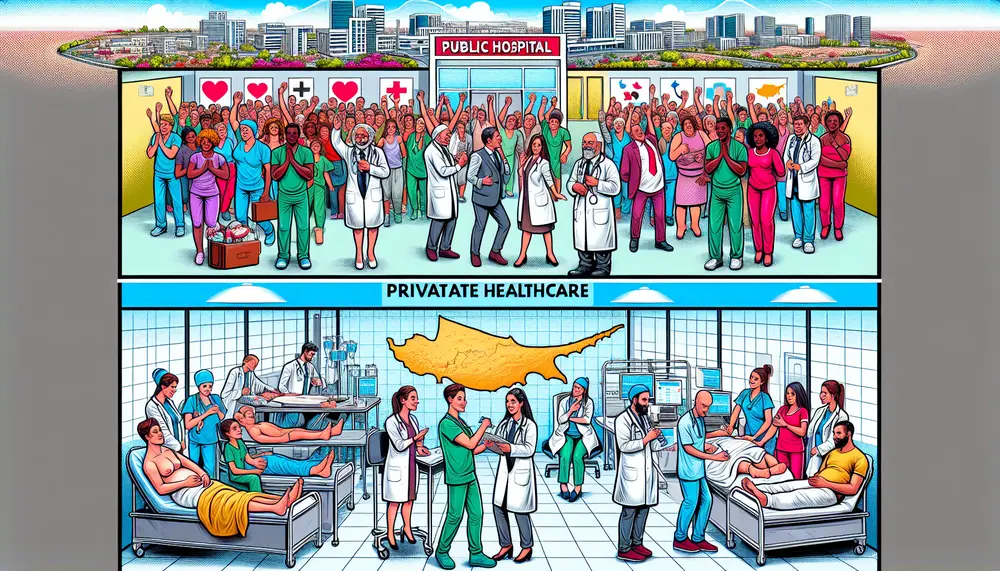
Public vs. Private Healthcare in Cyprus: Cost Structures, Quality Gaps, and Patient Outcomes
Cyprus operates a dual healthcare system that underwent its most significant transformation in 2019, when the General Healthcare System (GeSY/GESY) launched and fundamentally altered how residents access public care. Before GESY, Cyprus was one of the few EU countries without universal public health coverage — a historical gap that pushed an unusually high percentage of the population toward private providers. Today, understanding how both sectors interact is essential for anyone navigating healthcare on the island.
GESY and the Public Sector: What You Actually Get
GESY operates on a social insurance model funded through payroll contributions: employees contribute 2.65% of their gross income, employers add 2.90%, and self-employed individuals pay 4.70%. In return, registered beneficiaries access a network of contracted GPs, specialists, diagnostic services, and hospitals. The system covers Cyprus residents, including EU citizens and documented third-country nationals. However, the practical experience varies considerably. Waiting times for specialist appointments through the public system can run four to eight weeks for non-urgent referrals, and certain high-demand specialties like orthopedics and dermatology show even longer queues in urban centers like Nicosia and Limassol.
Hospital infrastructure under GESY includes the major state hospitals: Nicosia General, Limassol General, Larnaca General, Paphos General, and Famagusta General. These facilities handle acute care competently, but equipment modernization has been uneven across locations. Nicosia General, as the largest facility, carries the bulk of complex cases including cardiac surgery and oncology, while smaller regional hospitals operate with more limited specialist coverage. For a detailed breakdown of how to actually navigate hospitals, clinics, and specialist referrals within each sector, the pathways differ significantly depending on whether you enter via GESY or privately.
Private Healthcare: Cost Reality and Quality Advantages
The private sector in Cyprus is substantial and well-developed, with Limassol and Nicosia hosting the largest concentration of private hospitals and diagnostic centers. Facilities like the American Medical Center, Apollonion Private Hospital, and Iasis Hospital attract both local patients and medical tourists from Russia, Israel, and the Middle East. The cost differential is real: a private GP consultation runs €50–€90, specialist visits typically start at €80–€150, and diagnostic imaging such as an MRI ranges from €250–€450 depending on the facility and body region.
Where private care consistently outperforms the public system is in three measurable areas:
- Access speed: Same-week or next-day specialist appointments are standard
- English-language communication: Most private practitioners have international training and communicate fluently in English
- Diagnostic technology: Newer equipment with shorter turnaround times for results
The trade-off is cost exposure without adequate insurance. A three-day private hospital admission for a cardiac event can realistically reach €8,000–€15,000, making comprehensive private health insurance not optional but essential for expats relying on the private sector. Understanding the full range of available services and insurance structures in Cyprus helps avoid the common mistake of underinsuring against inpatient costs.
The most pragmatic approach many long-term residents adopt is a hybrid strategy: registering with GESY for baseline coverage and emergency access, while maintaining a private insurance policy for specialist care and planned procedures. For a thorough comparison of how these two tracks perform across specific medical scenarios, the complete guide to public versus private care covers patient pathways, reimbursement mechanics, and real-cost scenarios in depth.
Pros and Cons of Healthcare Systems in Cyprus
| Aspect | Pros | Cons |
|---|---|---|
| General Healthcare System (GeSY) |
|
|
| Private Healthcare |
|
|
| Overall Healthcare Experience |
|
|
Navigating Health Insurance in Cyprus: GESY Contributions, Private Policies, and Coverage Gaps
Cyprus operates a dual-track healthcare financing system that catches many newcomers off guard. Since its full rollout in June 2020, the General Healthcare System (GeSY) has fundamentally changed how residents access and pay for care — but understanding where public coverage ends and private responsibility begins is essential for anyone planning their healthcare budget on the island.
GeSY Contribution Rates and Entitlements
GeSY is funded through mandatory payroll contributions from employees, employers, the self-employed, and pensioners. As of 2024, employees contribute 2.65% of gross income, employers add 2.90%, and the self-employed pay 4.00%. There is a contribution ceiling of €180,000 annual income, meaning high earners effectively pay a capped amount. In return, registered beneficiaries gain access to GeSY-registered GPs, specialists, diagnostic services, hospital care, and pharmaceuticals at heavily subsidised co-payment rates — for example, a GP visit carries a €0 co-payment, while specialist referrals typically cost between €1 and €6.
What often surprises expats and new residents is that GeSY registration is not automatic. EU citizens with a valid Yellow Slip (MEU1 registration certificate) and third-country nationals with a Category F or MEU3 residence permit are generally eligible to register. Those on temporary visitor status, digital nomad visa holders in certain categories, and some immigration applicants may find themselves outside the system entirely during their initial period — a gap that makes having dedicated coverage during the immigration process a practical necessity rather than an optional extra.
Where GeSY Falls Short
GeSY covers a broad range of services, but the system has structural limitations that experienced residents learn to navigate proactively. Waiting times for specialist appointments can stretch from several weeks to several months in high-demand specialties such as orthopaedics, dermatology, and cardiology. Dental care under GeSY remains minimal — limited to extractions and basic emergency treatment — with virtually all restorative and cosmetic work excluded. The same applies to optical care, physiotherapy beyond acute injury phases, and most mental health services beyond a limited number of psychologist sessions per year.
For a comprehensive picture of how public and private services interact in practice, the full breakdown of healthcare services and insurance options in Cyprus is worth reviewing before selecting a policy. Private health insurance in Cyprus typically costs between €500 and €2,500 annually per adult depending on age, pre-existing conditions, and coverage scope. Policies from providers such as Allianz Care, AXA, Bupa Global, and local insurers like Laiki Cyprialife or CNP Cyprialife fill the gaps GeSY leaves: faster specialist access, private hospital rooms, international evacuation, and comprehensive dental and optical riders.
The decision between a GeSY-only approach and a combined public-private strategy depends heavily on your age, health profile, and how long you intend to stay. A healthy 30-year-old relocating for two years faces a very different risk calculation than a 55-year-old retiree with chronic conditions. For anyone navigating this decision, the detailed guidance on how health insurance works for expats and long-term residents addresses the practical nuances that general overviews miss — including portability, pre-existing condition clauses, and policy exclusions that only become visible when you need to make a claim.
- GeSY co-payments: €0 for GP visits; €1–€6 for specialist referrals; €0.50–€1 per pharmaceutical item
- Typical private insurance gaps to fill: dental restoration, physiotherapy, mental health, optical, and elective procedures
- Registration deadline: Register with a GeSY GP within 30 days of obtaining eligible residency status to avoid service disruptions
- International policies: Often more cost-effective for frequent travellers or those maintaining ties to another country's healthcare system
Healthcare Access for Expats and Immigrants: Registration, Eligibility, and Legal Requirements
Cyprus offers healthcare access to expats and immigrants through a tiered system that depends heavily on residency status, employment type, and contribution history. Understanding where you fall within this framework determines not just your entitlements, but also the financial exposure you face if gaps in coverage occur. The rules changed substantially with the full rollout of GeSY in June 2020, and many long-term residents are still navigating the transition.Who Qualifies for GeSY and How to Register
Eligibility for the General Health System is tied to legal residency and active participation through contributions. EU citizens who relocate to Cyprus and take up employment are automatically enrolled through payroll deductions — employers contribute 2.90% of gross salary, while employees contribute 2.65%. Self-employed EU nationals must register directly with the Health Insurance Organisation (HIO) and pay the combined rate of 4.00% on declared income. Non-EU nationals holding a valid work permit are equally eligible once employed, with contributions deducted through the same mechanism. The registration process itself requires presenting your ARC (Alien Registration Certificate) or national ID, your tax identification number (TIC), and proof of current residency. Third-country nationals navigating the broader residency process will find that healthcare documentation requirements overlap significantly with immigration procedures — something covered in detail within the full breakdown of Cyprus's immigration pathways. Pensioners receiving a Cyprus-sourced pension contribute 2.65% directly on their pension income. Those receiving foreign pensions need to verify their status with the HIO individually, as reciprocal agreements vary by country of origin.Coverage Gaps, Transitional Periods, and Private Insurance Requirements
A critical — and frequently overlooked — reality: GeSY does not cover everyone from day one. New arrivals who have not yet established employment, individuals in visa transition periods, or those awaiting ARC approval exist in a legal grey zone with no public coverage. During these windows, even a single emergency room visit can generate bills of €500–€2,000 or more at private hospitals such as Aretaeio or Ygia Polyclinic. Schengen D-visa and long-stay visa applicants are legally required to demonstrate health insurance coverage as part of their application — typically a minimum of €30,000 emergency coverage. For anyone serious about planning this correctly, understanding why private health coverage is a non-negotiable step during immigration prevents both legal complications and significant financial risk. Beyond the transition period, many expats discover that GeSY coverage, while functional, carries limitations worth addressing privately:- Specialist referrals require going through a registered GeSY personal doctor first, adding time delays
- Certain elective procedures and dental care (beyond emergency treatment) fall outside GeSY scope
- Wait times at public facilities like Nicosia General Hospital can run 4–8 weeks for non-urgent specialist appointments
- Repatriation and medical evacuation are never covered under GeSY
Hospitals, Specialist Clinics, and Emergency Services: A Practical Infrastructure Guide
Cyprus operates a two-tier hospital infrastructure that every resident and long-term visitor needs to understand before they actually need it. The island has six major government hospitals — in Nicosia, Limassol, Larnaca, Paphos, Famagusta, and Kyrenia (the latter two being in the north under separate administration) — alongside a growing network of private hospitals that has expanded significantly since the introduction of GeSY in 2019. Knowing which facility to use for which situation can mean the difference between a four-hour wait and same-day treatment.
Public Hospital Infrastructure: Capacity and Realistic Expectations
The Nicosia General Hospital is the largest public facility on the island, operating with approximately 530 beds and handling the most complex referral cases, including oncology and cardiac surgery. Limassol General Hospital functions as the second major hub, with strong emergency and trauma departments that serve the densely populated southern coast. For anyone navigating the public system, understanding how referrals and specialist appointments actually work through GeSY is essential — walk-in access to specialists without a GP referral simply does not exist under the public framework.
Emergency departments at all six government hospitals operate 24/7, but staffing ratios and wait times vary considerably. Limassol and Nicosia consistently experience the longest A&E queues, particularly during summer months when the tourist population surges. Patients with non-life-threatening conditions should expect waits of 3–6 hours at peak times. The triage system follows a colour-coded priority protocol (red, orange, green), so a chest pain case will always bypass a sprained ankle regardless of arrival time.
Private Hospitals and Specialist Clinics: Where Quality Meets Speed
The private sector has matured considerably, with facilities like Apollonion Private Hospital in Nicosia, Evangelismos Hospital in Paphos, and Iasis Hospital in Limassol offering JCI-accredited or equivalent standards. These hospitals typically guarantee specialist consultations within 24–48 hours, compared to weeks or months through public channels. The trade-off is cost: a private specialist consultation runs €80–150, while inpatient surgical procedures can reach €8,000–15,000 for complex cases. Anyone weighing these options should examine the practical cost and access differences between the two systems before committing to a coverage strategy.
Specialist clinics — particularly in cardiology, orthopaedics, ophthalmology, and fertility treatment — operate largely independently of hospital structures in urban centres. Paphos and Limassol have seen notable growth in medical tourism-oriented fertility and cosmetic surgery clinics, some attracting patients from across Europe due to competitive pricing (IVF cycles typically €2,500–4,000 versus €5,000+ in Northern Europe).
For emergency situations, the island-wide emergency number is 112, with ambulance response times averaging 8–12 minutes in urban areas and up to 25 minutes in rural Troodos or remote Akamas peninsula locations. Helicopter medevac coordination runs through the Joint Rescue Coordination Centre in Larnaca for cases requiring transfer to Nicosia General. Residents in remote areas should factor this into their planning and ensure their insurance coverage explicitly includes emergency transport and repatriation, as ambulance fees and air transfers are not automatically covered under GeSY for non-emergency classifications.
- Dialysis services: Available at all major government hospitals and several private centres; visiting patients needing scheduled dialysis must arrange placements at least 4 weeks in advance
- Mental health inpatient: Athalassa Psychiatric Hospital near Nicosia remains the primary public facility; private psychiatric beds are limited island-wide
- Paediatric emergencies: Makarios Hospital in Nicosia is the designated paediatric referral centre with a dedicated PICU
- 24-hour pharmacies: Operate on a rotating duty system; check the Cyprus Pharmaceutical Services website or call 1415 for the nearest on-call pharmacy
Healthcare Costs in Cyprus: Fee Schedules, Out-of-Pocket Expenses, and Financial Risk Management
Cyprus operates a dual-track healthcare system where costs vary dramatically depending on whether you access services through the public General Healthcare System (GeSY/GESY) or the private sector. Understanding this pricing landscape is not optional — miscalculating your healthcare exposure can translate into five-figure bills from a single hospitalization or specialist intervention.
GESY Copayments and Private Sector Fee Benchmarks
Under GESY, registered beneficiaries pay nominal copayments: €6 per GP visit, €10–15 for specialist referrals, and €0 for emergency department access after registration. Prescription medications are capped at €1 per item for most drugs on the formulary. These figures make GESY extremely cost-effective for routine care, but the system imposes referral gatekeeping — you cannot self-refer to a cardiologist or orthopedic surgeon without a GP authorization, which adds friction for time-sensitive conditions.
In the private sector, fee schedules are unregulated and reflect market positioning. A private GP consultation in Limassol or Nicosia typically runs €50–90. Specialist consultations start at €100–150, with cardiologists, neurologists, and oncologists frequently billing €200+ per visit. Diagnostic imaging tells a starker story: a private MRI scan costs between €300–600 depending on the body region and facility, while a comprehensive blood panel can run €150–300 at accredited private labs. If you are evaluating where to access specific services, the detailed breakdown of how hospitals and specialist clinics are structured across Cyprus provides essential context for cost planning.
Where Financial Risk Concentrates
The most significant cost exposure lies in inpatient care and surgical procedures. A private hospital admission for an elective orthopedic procedure — knee replacement, for example — can total €8,000–18,000 including surgeon fees, anesthesia, facility charges, and post-operative physiotherapy. Cardiac interventions such as stent placement routinely exceed €15,000–25,000 in private facilities. Even a straightforward appendectomy in a private hospital will generate a bill of €3,000–6,000. These are not edge cases — they represent the realistic cost of acute care that bypasses GESY waiting lists or falls outside public sector capacity.
For expats and long-term residents, the financial risk calculation must account for GESY eligibility gaps. Non-EU nationals on certain visa categories, digital nomads, or new arrivals in the GESY registration window face a period of full private exposure. This is precisely why health coverage during the immigration process deserves serious financial planning rather than afterthought treatment.
Effective financial risk management combines three elements:
- GESY registration as baseline — even with its limitations, the copayment structure provides substantial protection for chronic disease management and routine care
- Supplemental private insurance with meaningful inpatient coverage limits — look for policies offering at least €100,000–200,000 annual inpatient benefit
- Emergency fund allocation — maintain €3,000–5,000 in liquid savings to cover copayments, non-formulary medications, and services not reimbursed within standard policy terms
The nuances of selecting coverage that actually performs when you need it — deductibles, pre-existing condition clauses, direct billing networks — are examined in depth in the practical guide to health insurance options for residents and expats. Cyprus rewards those who plan ahead; it penalizes those who discover coverage gaps at the point of care.
FAQ about Healthcare in Cyprus
What is the General Healthcare System (GESY) in Cyprus?
GESY is Cyprus's national health insurance system, providing universal healthcare coverage to all legal residents, including EU citizens and non-EU nationals with valid residency permits.
How is GESY funded?
GESY is funded through mandatory payroll contributions from employees, employers, and self-employed individuals, as well as government contributions for public sector workers.
What are the typical waiting times for specialist appointments under GESY?
Waiting times for specialist appointments through GESY can range from several weeks to several months, especially in high-demand specialties like orthopedics and dermatology.
What are the advantages of private healthcare in Cyprus?
Private healthcare offers faster access to specialists, higher quality facilities, and English-speaking practitioners. Patients can often receive same-day or next-day appointments.
Are dental and optical services covered under GESY?
GESY provides limited coverage for dental and optical services, primarily covering emergency treatments. Most dental work and optical care fall outside the GESY benefits.