
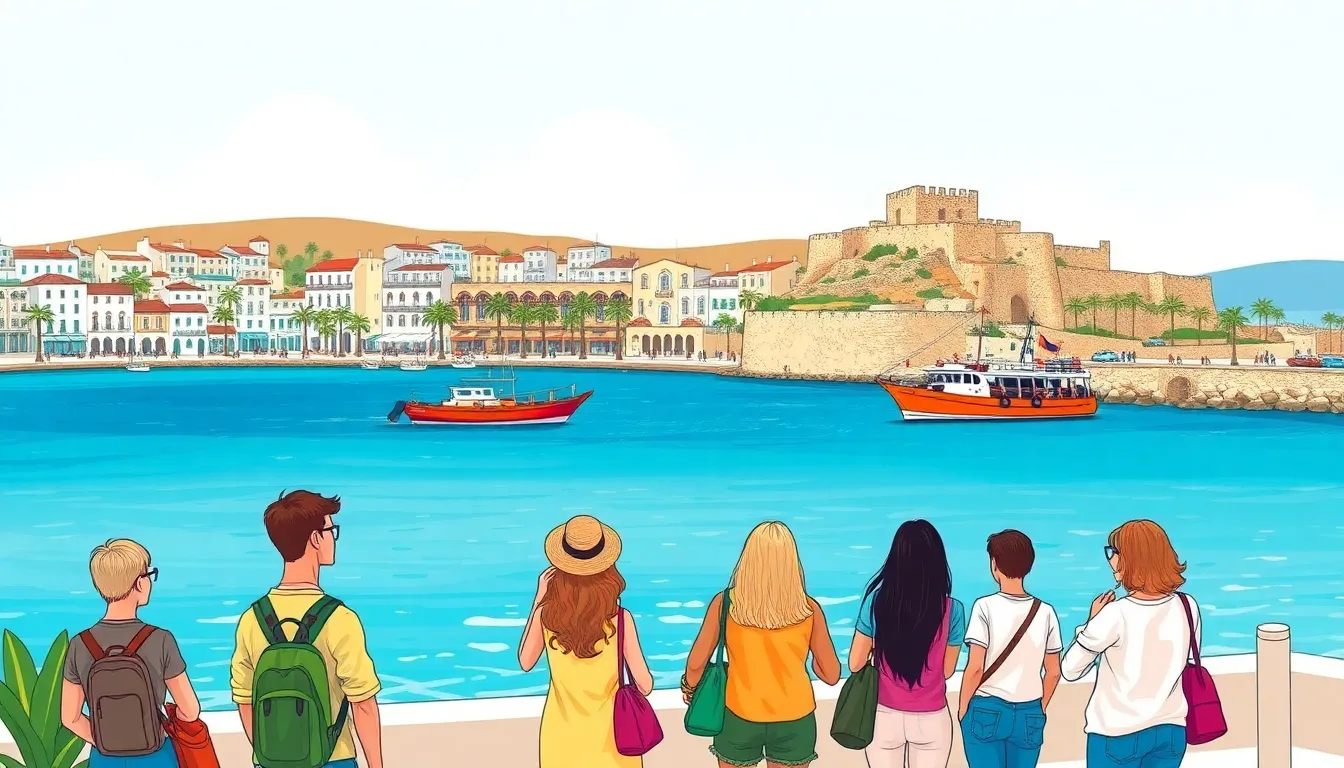
Table of Contents:
Limassol: Cyprus’s Largest City for Beaches, Dining, and Nightlife
Limassol is Cyprus’s largest city in the 2026 city ranking, with about 111,633 residents. It is also one of the island’s easiest places to combine a beach day, a lively dinner, and an evening out without long transfers. The city stretches along the southern coast, so the sea is not a side attraction—it shapes the whole visit.
Start at the Old Port and Molos promenade. The waterfront path runs past palm trees, outdoor art, cafés, and open sea views. It works well early in the morning, when the air is cooler, or after sunset, when Limassol becomes more sociable. The nearby marina adds polished restaurants and boat views, while the old center offers a more layered feel.
For history, visit Limassol Castle and the surrounding medieval quarter. The castle houses the Cyprus Medieval Museum, with objects linked to the island’s long Byzantine, Lusignan, Venetian, and Ottoman past. A short walk away, narrow lanes lead to small galleries, workshops, coffee shops, and restaurants in restored buildings. This is the part of Limassol that rewards wandering rather than rushing from one landmark to the next.
The city’s beaches differ in mood. Dasoudi Beach is convenient and shaded by eucalyptus trees, with a promenade and basic facilities close by. Lady’s Mile, west of the center, has a longer and more open shoreline, making it a better choice when you want space. For a quieter swim, look toward the coastal areas east of the city, although a car or taxi makes the journey much easier.
Food is a major reason to stay after dark. Try traditional Cypriot dishes such as meze, grilled halloumi, souvlaki, and lamb cooked slowly with herbs. Limassol also has modern kitchens, wine bars, and cafés aimed at a mixed local and international crowd. The best plan is simple: book a table for a relaxed meal, then walk toward the waterfront instead of trying to fit every stop into one evening.
Nightlife is concentrated around the old town, the marina, and the seafront. You will find cocktail bars, live music, late cafés, and clubs, but the atmosphere changes by season. Summer brings more outdoor activity; winter feels calmer and more local. Thursday through Saturday usually offers the broadest choice, while weeknights suit visitors who prefer conversation over loud music.
Limassol also makes a strong base for short trips. The ancient city of Curium lies roughly 19 kilometers west and combines a Greco-Roman theatre with dramatic coastal views. Inland, the wine villages of the Limassol district offer small producers and mountain scenery. Plan these excursions separately: city traffic can be slow, and a rental car is useful beyond the coastal strip.
- Best for: beach-and-city breaks, restaurants, nightlife, and a busy waterfront.
- Stay near: the old town for character, Molos for sea access, or Germasogeia for a more resort-like setting.
- Allow: at least two full days; three days gives time for Curium or the wine villages.
- Keep in mind: Limassol is spread out, and walking alone will not cover every beach or eastern suburb.
Choose Limassol if you want Cyprus to feel energetic and varied rather than purely resort-based. It can be stylish, noisy, sunny, and a little chaotic—all in the same afternoon. That mix is exactly its charm.
Nicosia: The Capital for History, Culture, and Urban Life
Nicosia is Cyprus’s capital and its main centre for museums, public life, and layered history. Unlike the island’s coastal cities, it has no seafront. Its appeal lies inland, inside and around the old Venetian walls, where medieval streets, modern cafés, civic buildings, and a divided urban landscape meet.
Begin in the old walled city. The star-shaped fortifications still shape the map, with eleven bastions linked by defensive walls. Within them, Laiki Geitonia offers restored lanes, craft shops, tavernas, and small courtyards. It can feel touristy in places, but early morning brings out a quieter, more authentic rhythm.
History becomes especially tangible around Ledra Street, the busy pedestrian route through the historic centre. The street leads to the Ledra Palace crossing, one of the points where visitors can pass between the Republic of Cyprus and the northern part of the city, subject to current crossing rules and valid travel documents. Check official requirements before you go, because border procedures can change.
The Cyprus Museum is the essential stop for archaeology. Its collection spans prehistoric periods, classical antiquity, Hellenistic rule, and Roman Cyprus. Give it at least ninety minutes. Visitors who prefer art should add the Leventis Municipal Museum of Nicosia, which traces the capital’s development through maps, objects, photographs, and everyday history.
For religious architecture, compare Faneromeni Church in the old city with the nearby Omeriye Mosque. Their presence reflects the capital’s complex Ottoman and Christian past. Dress respectfully, avoid entering during services, and remember that some sites may have limited opening hours.
Nicosia’s modern side is strongest around Stasikratous Street, Makariou Avenue, and the university district. Here, specialty coffee shops, bookstores, design stores, and contemporary restaurants serve a younger crowd. The contrast is useful: one afternoon can move from ancient sculpture to a sharp espresso bar without leaving the central area.
- Best for: museums, architecture, political history, local food, and urban exploration.
- Stay in: the old city for atmosphere or the central business district for modern hotels and evening dining.
- Plan: one full day for the historic centre; two days allow time for museums and both sides of the city.
- Travel tip: comfortable shoes matter because the old quarter has uneven paving and long walking stretches.
Nicosia suits travellers who want context rather than a postcard view. It is thoughtful, sometimes stark, and wonderfully layered. Visit with time to spare, not just as a quick stop between the airport and the coast.
Cyprus Cities Compared: Highlights, Best Uses, and Travel Considerations
| City or Area | Best For | Key Highlights | Recommended Stay | Points to Consider |
|---|---|---|---|---|
| Limassol | Beaches, dining, nightlife, and waterfront activities | Old Port, Molos promenade, Limassol Castle, Dasoudi Beach, marina, and nearby Curium | 2–3 days | The city is spread out, and traffic can make travel between beaches and suburbs slow |
| Nicosia | History, museums, architecture, and urban culture | Venetian walls, Ledra Street, Cyprus Museum, Laiki Geitonia, churches, and mosques | 1–2 days | There is no beach, and walking distances in the old city can be considerable |
| Larnaca | Short stays, airport access, relaxed beaches, and historic walks | Finikoudes promenade, McKenzie Beach, Saint Lazarus Church, medieval castle, and Hala Sultan Tekke | 2 nights | The city is quieter and less resort-oriented than Limassol or Paphos |
| Paphos | Archaeology, Roman history, harbour views, and sunset walks | Paphos Archaeological Park, Roman mosaics, Paphos Castle, Tombs of the Kings, and Coral Bay | 2–3 days | Ancient sites offer limited shade, and some paths are uneven |
| Polis | Nature, hiking, quiet evenings, and western Cyprus exploration | Latsi harbour, Baths of Aphrodite, Akamas Peninsula, and coastal walking routes | 2–4 days | A car is useful, and boat trips and trail access can depend on weather and season |
| Peyia | Villas, coastal views, Coral Bay, and scenic drives | Sea Caves, Coral Bay, Agios Georgios, and access to Akamas landscapes | 3–4 days | The area is hilly and spread out, making a car or taxi especially helpful |
| Strovolos and Lakatamia | Residential stays, local life, and longer visits near Nicosia | Pedieos Linear Park, local cafés, shops, neighbourhood streets, and suburban life | 3+ days | These areas have fewer conventional tourist attractions and rely on bus or car travel |
| Germasogeia and Agios Athanasios | Resort-style accommodation, sea views, and access to eastern Limassol | Germasogeia tourist zone, Germasogeia Dam, restaurants, hotels, and hillside viewpoints | 3+ days | Hilly terrain and distance from central Limassol can affect walkability |
Larnaca: A Relaxed Coastal City Near Cyprus’s Main Airport
Larnaca is a practical first or last stop for many Cyprus trips. The city sits beside the island’s main airport, yet it feels calmer than a large resort centre. Its compact waterfront, shallow bay, and walkable historic core make short stays surprisingly easy.
Begin along the Finikoudes promenade, where cafés, palm trees, and a broad sandy beach line the centre. The water is usually gentle, and the gradual seabed suits families and relaxed swimmers. For a quieter shoreline, continue south to McKenzie Beach, a popular spot for swimming, beach bars, and watching aircraft approach the nearby runway.
Larnaca’s most distinctive landmark is the Church of Saint Lazarus. Built in the ninth century, it is linked to the tradition that Lazarus lived and served as bishop here after his resurrection. Its stone exterior and carved icon screen make it one of the island’s finest examples of Byzantine religious architecture. Visit outside service times and dress with care.
Walk west from the church to the Larnaca Medieval Castle, a small fortress beside the sea. The structure has served several roles over the centuries, including a prison during British rule. Its modest size means the visit is quick, but the upper level offers a useful view over the old quarter and coastline.
South of the centre, the Hala Sultan Tekke stands beside the salt lake. The mosque is an important Muslim pilgrimage site and is associated with Umm Haram, a relative of the Prophet Muhammad. The surrounding lake attracts flamingos in the cooler months, especially after seasonal rain. Bring binoculars, keep a respectful distance, and do not expect birds in every season.
Larnaca is also a strong choice for food-focused travellers. Look for tavernas serving grilled fish, seafood meze, stuffed vegetables, and loukoumades, small syrup-coated doughnuts. The old neighbourhoods behind the promenade are often better for a slower meal than the busiest beachfront tables. Prices and quality vary, so a crowded local dining room is usually a useful clue.
- Best for: short stays, easy airport access, gentle swimming, and historic walks.
- Ideal visit: two nights, with extra time for the salt lake and nearby villages.
- Best beach choice: Finikoudes for convenience or McKenzie for a livelier seaside setting.
- Getting around: the centre is walkable; buses and taxis help with the airport, salt lake, and outer beaches.
Choose Larnaca when you want a smooth arrival, a manageable city centre, and enough culture to fill more than a spare evening. It is not flashy, and that is part of the appeal: the pace stays pleasantly unhurried.
Paphos: Ancient Sites, Harbor Views, and Sunset Walks
Paphos is the best Cyprus city for travellers who want major archaeological sites close to a compact harbour area. The city’s historic core is not one single monument; it is a walkable chain of ruins, churches, museums, and seafront paths. That makes it easy to build a day around short visits instead of long drives.
Start at the Paphos Archaeological Park, a UNESCO World Heritage site. Its Roman villas contain detailed mosaic floors showing scenes from Greek mythology. The House of Dionysos is the highlight, but the House of Theseus and the House of Aion add different styles and stories. Allow two to three hours, wear a hat, and carry water: shade is limited across the open site.
At the edge of the harbour, the Paphos Castle provides the city’s most recognisable viewpoint. The small stone fortress has been rebuilt several times, so its value lies less in a large interior collection and more in its position at the end of the breakwater. Visit in the late afternoon, when the low sun softens the harbour and the nearby promenade becomes pleasantly busy.
History continues inland at the Tombs of the Kings, about two kilometres north of the harbour. These underground burial chambers date mainly from the Hellenistic and Roman periods. Despite the name, they were built for high-status residents rather than crowned rulers. The carved courtyards and columns are impressive, but the uneven ground can be difficult for visitors with limited mobility.
For a quieter cultural stop, visit the Agia Kyriaki Chrysopolitissa Church and the nearby Saint Paul’s Pillar. The site combines early Christian remains with a later church, giving a clear sense of how sacred spaces changed over many centuries. Modest clothing is sensible, especially when entering the church.
Paphos works well for sunset walks because the shoreline path links several points of interest. Walk north from the harbour toward the lighthouse area, or head south toward the coastal hotel zone for a longer, more open route. The sea can become rough in winter, so stay behind barriers where signs advise it.
The city also offers access to Coral Bay, around 12 kilometres north, with a sheltered sandy beach and clearer swimming conditions than some exposed coastal stretches. A bus or taxi is usually easier than walking. For a more ambitious day, the Akamas Peninsula begins farther west, but it needs careful planning and is better suited to travellers with a car or a guided excursion.
- Best for: archaeology, Roman mosaics, harbour strolls, and cultural weekends.
- Stay near: the harbour for evening walks or Kato Paphos for quick access to the archaeological park.
- Allow: two full days for the main monuments; add another day for Coral Bay or the Akamas area.
- Prepare for: strong sun at exposed ruins, uneven paths, and limited shade.
Choose Paphos when ancient history should sit at the centre of your trip, not in a rushed afternoon slot. Its monuments are substantial, its waterfront is easy to explore, and its evenings have a slower, more reflective mood than the island’s busier resort cities.
Strovolos and Lakatamia: Local City Life Near Nicosia
Strovolos and Lakatamia offer a more residential view of the Nicosia area. Together, they are among the largest urban centres in Cyprus, yet they feel less like sightseeing districts and more like places where people study, work, shop, exercise, and meet friends. For travellers, that makes them useful bases for a slower, more local stay.
Strovolos lies south of central Nicosia and is known for broad residential streets, schools, offices, and everyday shopping. The municipal area includes sections of the Linear Park, a green corridor along the Pedieos River. It is one of the better places near the capital for a morning walk, a run, or a quiet break away from traffic. The path is especially pleasant in spring, when the vegetation is fresh.
The Pedieos Linear Park stretches through several parts of the wider Nicosia urban area. It is not a traditional tourist attraction with a single entrance or landmark. Instead, it works as a local public space: cyclists pass through, families use the paths, and residents exercise before the heat builds. Bring water, since services are not evenly spaced along the route.
Lakatamia sits farther west and has a distinctly suburban character. Its streets reveal how the capital’s built-up area has expanded beyond the historic centre. You will find bakeries, small restaurants, supermarkets, sports facilities, and cafés used mainly by residents. The experience is ordinary in the best sense—less polished for visitors, but more revealing of daily Cypriot life.
Travellers interested in architecture and urban change should explore the contrast between older village elements and newer housing developments. Traditional stone houses, church courtyards, and low-rise streets can appear close to apartment blocks and busy commercial roads. There is no grand postcard moment here; the interest lies in the transition from village edge to modern suburb.
These municipalities are also practical for visitors attending events or staying longer in the capital. Accommodation can offer more space than a room inside the old centre, while supermarkets and local services are close at hand. Public buses connect the districts with central Nicosia, but journey times vary with traffic. A car is helpful for evening plans across the metropolitan area.
- Best for: residential neighbourhoods, green walking routes, longer stays, and everyday city life.
- Choose Strovolos for: easier access to the Pedieos corridor and a broad mix of shops and services.
- Choose Lakatamia for: a quieter suburban base and a closer look at modern Nicosia’s outer districts.
- Visit on: weekday mornings or early evenings, when local streets have the most energy.
Strovolos and Lakatamia are not substitutes for Nicosia’s historic core. They add a different layer. Stay here when you want room to breathe, local routines, and a view of how Cyprus’s capital region actually functions beyond its monuments.
Germasogeia and Agios Athanasios: Limassol’s Coastal Neighborhoods
Germasogeia and Agios Athanasios show a different side of the Limassol area. Both municipalities lie east of the city centre, where residential streets, hillside homes, hotels, restaurants, and sea-facing viewpoints blend into one expanding urban corridor. Their appeal is less about major landmarks and more about choosing the right base for comfort, views, and access.
Germasogeia is the livelier of the two. Its lower section reaches the coast, while the older village area rises inland around the Germasogeia Dam. The dam is a useful escape from the built-up shoreline, with dry hills, seasonal greenery, and quiet roads. Birdlife appears around the water, though conditions vary during hot, dry months. Early morning is the pleasant time to explore.
The Germasogeia tourist zone has a broad choice of hotels, serviced apartments, tavernas, bars, and international restaurants. It suits visitors who want evening options close to their accommodation without staying in the busiest central streets. The area feels more resort-oriented than the old town, but it remains practical for longer stays and self-catering trips.
Agios Athanasios climbs the slopes above Limassol and is known for its residential character and elevated position. Upper streets can provide wide views across the city and the Mediterranean, especially around sunset. The terrain is hilly, so the district is better for travellers with a car or taxi budget than for anyone planning to walk everywhere.
One useful distinction is simple: choose lower Germasogeia for easier access to hotels, restaurants, and coastal facilities; choose upper Agios Athanasios for space, quiet, and panorama. Accommodation listings can look close on a map, yet steep roads and busy junctions may make short distances feel longer than expected.
The area is also well placed for a more active itinerary. Cycling routes and coastal roads lead east toward smaller beaches and villages, while the hills behind the suburbs connect with countryside drives into the Limassol district. Public transport covers the main coastal axis, but service is less convenient on steep residential roads.
- Choose Germasogeia for: resort-style accommodation, restaurants, nightlife nearby, and a convenient coastal base.
- Choose Agios Athanasios for: quieter evenings, larger properties, and elevated city views.
- Best for: couples, families, digital nomads, and travellers staying several nights.
- Check before booking: distance to the coast, parking, hill gradients, and bus access.
These districts work best when you treat them as neighbourhoods, not as separate sightseeing cities. Their real value is strategic: they let you enjoy Limassol’s eastern side while avoiding the need to sleep in the busiest central zone.
Polis and Peyia: Quieter Bases Near Western Cyprus’s Natural Landscapes
Polis and Peyia suit travellers who want western Cyprus close at hand, but not on their doorstep. Both places offer a slower base for exploring coastal cliffs, forest tracks, sea caves, and protected landscapes. They are quite different in character, so the better choice depends on whether you prefer a small town or a hillside resort community.
Polis is the quieter option. Its compact centre has local cafés, bakeries, tavernas, and low-rise streets, while nearby Latsi adds a small harbour and a string of swimming spots. Latsi is useful for boat trips toward the Akamas coast, but departures depend on weather and season. Reserve ahead in summer, especially if you want a smaller vessel rather than a large group cruise.
The nearby Baths of Aphrodite sit at the start of several walking routes in the Akamas region. The shaded grotto itself is modest, yet the surrounding trails lead into rougher terrain with coastal views and aromatic shrubs. Do not treat the area like a paved park: sturdy shoes, sun protection, and enough water matter once you leave the short access path.
Peyia stands farther south on elevated ground above Coral Bay. It has a stronger holiday-home and villa presence than Polis, with restaurants, supermarkets, and broad views across the coast. The village centre retains older streets and stone buildings, while the outer slopes feel more suburban. A rental car is helpful because attractions and beaches are spread across steep roads.
From Peyia, the Sea Caves and the coastal section near Agios Georgios are easy additions to a western Cyprus itinerary. The rock formations are striking at golden hour, but swimming near unprotected cliffs can be dangerous when waves rise. Stay on marked paths and keep well back from unstable edges.
The region’s strongest asset is access to the Akamas Peninsula, a protected area known for rugged coastline, endemic plants, and nesting beaches. Conditions vary by track, and some routes are unsuitable for ordinary rental cars. Use a licensed guide or a suitable vehicle for remote areas, and follow seasonal signs that protect turtles and other wildlife.
- Choose Polis for: a small-town feel, easy access to Latsi, and a quieter evening atmosphere.
- Choose Peyia for: villas, elevated views, restaurant choice, and proximity to Coral Bay and the Sea Caves.
- Best for: hikers, nature lovers, couples, and travellers who prefer scenic drives to busy urban centres.
- Plan carefully: boat schedules, trail conditions, heat, and beach access can change with season and weather.
Polis works best for a calm, outdoors-focused escape. Peyia offers more accommodation and dining options, but with a busier holiday feel. Pick the base that matches your pace, then leave time for the western landscape itself—the real reason to come this far.
Aradippou, Kato Polemidia, and Nearby Urban Areas
Aradippou and Kato Polemidia reveal the practical, expanding side of Cyprus’s urban network. They are not classic sightseeing centres, yet both are useful for travellers who want lower-key accommodation, local services, and quick access to larger destinations.
Aradippou lies just outside Larnaca and has grown from a village into a substantial residential municipality. Its older core still contains traditional houses, small churches, and narrow streets, while newer districts bring apartment buildings, shops, schools, and supermarkets. The contrast is subtle but worthwhile: walk through the centre first, then explore the newer roads to see how the settlement has changed.
The town is particularly convenient for visitors travelling by car. Its position near the A5 and A3 roads makes day trips toward Larnaca, the island’s central plain, and the east coast relatively straightforward. Traffic can build during commuting hours, so allow extra time when driving toward the airport or coastal resorts.
Aradippou also offers a more residential alternative to staying directly on the Larnaca seafront. Apartments and guesthouses may provide kitchens, parking, and more space, which can suit families or travellers planning a longer visit. The trade-off is distance: evening walks beside the sea usually require transport.
Kato Polemidia forms part of the western approach to Limassol. Its location near major roads makes it practical for travellers exploring the city, the Troodos foothills, or villages in the Limassol district. The municipality is largely urban and residential, with workshops, retail areas, schools, and everyday restaurants rather than a concentrated tourist quarter.
One of Kato Polemidia’s useful features is its access to the Holy Monastery of Panagia Amirous, located in the wider Limassol area. The monastery sits in a greener setting than the surrounding suburbs and offers a quieter cultural stop. Check opening arrangements before travelling, since religious sites may close outside visitor hours.
Both areas work best as logistical bases, not as replacements for Cyprus’s headline destinations. They are valuable when parking, motorway access, and room size matter more than being able to step straight into a historic centre.
- Choose Aradippou for: access to Larnaca, residential accommodation, and convenient road connections.
- Choose Kato Polemidia for: western access to Limassol, practical services, and trips toward the interior.
- Best for: road trips, families, longer stays, and travellers using a rental car.
- Check before booking: public transport, parking, road noise, and the exact distance to the attraction you plan to visit.
These urban areas reward travellers who value flexibility over postcard scenery. Stay there when you need a dependable base, then use the saved time and road access to explore beyond the main coastal corridors.
How to Choose the Best Cyprus City for Your Trip
The right Cyprus city depends on your trip style, not simply on population size. Use four practical filters: the kind of days you want, your transport plan, the season, and how often you are willing to change accommodation.
- For a first city break: choose Limassol if you want the broadest mix of dining, beaches, evening activity, and day-trip options.
- For museums and historic context: choose Nicosia, especially when archaeology, architecture, and urban culture matter more than swimming.
- For a short arrival or departure stay: choose Larnaca. Its airport access and compact layout reduce transfer stress.
- For ancient sites: choose Paphos, where major archaeological attractions can anchor a two- or three-day plan.
- For nature and quiet: choose Polis for a small-town base or Peyia for more accommodation and easier access to western coastal scenery.
- For a residential base: consider Strovolos, Lakatamia, Aradippou, or Kato Polemidia when parking, space, and local services matter most.
Your transport choice can change the answer. Without a car, stay in a compact centre with frequent bus links and attractions close together. With a rental car, outer municipalities become more useful, particularly for combining towns with mountain roads, archaeological sites, or remote beaches. Always check parking at the accommodation; a cheap room with difficult parking can cost time every day.
Think about geography before booking a single base. Cyprus looks small on a map, but mountain roads, summer traffic, and long cross-island journeys can make a packed itinerary tiring. A coastal city is not automatically close to every beach, and an inland base may be better for cultural stops than for spontaneous swims.
Season matters, too. In July and August, exposed historic sites are hardest to enjoy in the middle of the day, while coastal towns feel busiest. Spring and autumn are better for walking, cycling, and archaeological touring. Winter brings cooler weather, shorter opening hours, and a quieter mood; some seasonal restaurants and boat services may not operate.
Families should prioritise shallow water, supermarkets, washing facilities, and short evening transfers. Couples may prefer a walkable old quarter or a hillside view. Travellers focused on archaeology should avoid moving hotels every night, because one well-placed base leaves more time for sites and less for packing. Digital nomads and long-stay visitors should check reliable internet, winter heating, workspace, and grocery access rather than judging a neighbourhood by its holiday photos.
A simple decision rule works well: choose one main city for every three or four nights, then add a second base only when it saves substantial driving time. For a week, a coastal-and-inland split is usually enough. For a long weekend, stay in one city and explore nearby areas by day.
Before confirming a booking, compare the exact address, not just the city name. Check transfer time, terrain, bus frequency, seasonal opening hours, and the location of the nearest supermarket. That small check often separates a smooth Cyprus trip from an itinerary that looks brilliant on paper but feels rushed in practice.
Fazit: Match Your Cyprus City to Your Travel Plans
Cyprus becomes easier to plan when your city matches the purpose of your trip. Choose the place that supports your daily rhythm, rather than trying to visit every urban area in one rushed route.
- Pick Limassol for a lively coastal break with varied evenings and a broad choice of accommodation.
- Pick Nicosia for museums, civic history, and a distinctly inland city atmosphere.
- Pick Larnaca when flight convenience and a short, low-stress stay matter most.
- Pick Paphos when archaeological heritage is the main reason for travelling.
- Pick Polis for a slower western base focused on outdoor days.
- Pick Peyia when you want hillside accommodation and access to western coastal scenery.
- Pick Strovolos, Lakatamia, Aradippou, or Kato Polemidia for residential comfort, local services, and a practical longer stay.
Do not treat the 2026 population ranking as a visitor ranking. A smaller place can suit your plans far better than a larger city. The most useful choice is the one that cuts down daily backtracking, fits your energy level, and leaves room for unplanned discoveries.
For a first visit, one main base is often enough. A second location makes sense when your interests divide clearly between inland culture and western landscapes, or when you want to end the trip close to your departure airport. Keep the final decision flexible until you have checked transport, seasonal opening times, and the exact location of your accommodation.
Cyprus rewards a balanced itinerary: a city for atmosphere, a neighbourhood for local life, and a quieter base for breathing space. Match those elements to your travel plans and the island feels less like a checklist—and much more like a place you have actually experienced.
Frequently Asked Questions About Visiting Cyprus Cities
Which city is best for a first trip to Cyprus?
Limassol is a strong choice for a first trip because it combines beaches, restaurants, nightlife, a lively waterfront, historic attractions, and access to nearby day trips. Larnaca is also practical for short visits because it is close to Cyprus’s main airport.
Which Cyprus city is best for history and archaeology?
Nicosia is ideal for museums, historic architecture, and the island’s complex political history. Paphos is the best choice for archaeological sites, including Roman mosaics, the Paphos Archaeological Park, the Tombs of the Kings, and Paphos Castle.
Which Cyprus city is best for beaches and nightlife?
Limassol offers one of the best combinations of beaches, dining, bars, and evening entertainment. Its waterfront, old town, marina, and nearby coastal areas make it suitable for travellers who want both relaxation and a lively atmosphere.
How many days should you spend exploring Cyprus cities?
Allow two to three days for Limassol or Paphos, one to two days for Nicosia, and around two nights for Larnaca. A week-long trip can combine one coastal city with Nicosia or a quieter western base such as Polis or Peyia.
Do you need a car to visit Cyprus cities?
A car is not essential in compact centres such as central Larnaca, Nicosia, or the harbour area of Paphos. It becomes more useful for reaching beaches, mountain villages, the Akamas Peninsula, Peyia, Polis, and residential areas outside the main city centres.